




Irish Driving: Essential Tips for Safer Driving in Snow and Ice on Irish Roads

Irish Driving: Essential Tips for Safer Driving in Snow and Ice on Irish Roads

6 Jan 2026

Winter weather in Ireland can change quickly. Snow, ice, and freezing temperatures can make even familiar roads unpredictable — especially early in the morning or after dark. Bad weather presents a significant challenge for Irish drivers. Whether you’re commuting, doing the school run or heading out for essentials, taking extra care behind the wheel during icy conditions is crucial.

Here is practical advice to help drivers prepare for winter driving conditions, with tips to help you drive more safely on Irish roads during snow and ice.

1. Check the Weather and Road Conditions Before You Travel

Before setting off, always check:

  • Met Éireann weather warnings

  • Local traffic updates

  • Road conditions for rural or untreated roads

  • Whether your trip is necessary, especially in adverse weather, and plan your journey with safety in mind

In Ireland, black ice is one of winter's biggest hazards as it is difficult to see, it's particularly common on:

  • Shaded areas

  • Bridges and overpasses

  • Rural roads

  • Early mornings and late evenings

You can find up-to-date information on road closures or hazardous conditions from official sources before starting your trip. Planning ahead can help you avoid unnecessary journeys in hazardous conditions.

2. Make Sure Your Car Is Winter-Ready

A well-maintained car is essential for safe winter driving. Before travelling:

  • Check your battery, especially if it is older than three years, as cold weather can reduce its reliability.

  • Ensure your tyres have a minimum tread depth of 1.6 mm for winter driving.

  • Maintain proper tyre pressure during winter, as it can drop with temperature changes.

  • Check that your spare wheel is in good condition and fully inflated before winter driving.

  • Carry essentials such as a high visibility vest and de-icing equipment, including de-icer spray.

  • Ensure tyres are correctly inflated and have adequate tread depth.

  • Check brakes, lights, windscreen wipers and washer fluid.

  • Always de-ice and scrape your windscreen, windows, and glass before driving off to maintain clear visibility.

  • Check your locks to ensure they are not frozen, and use de-icer if necessary.

Many newer cars are fitted with technology such as traction control, which will transfer power to a spinning wheel. Electronic Stability Control (ESC) and Anti-Lock Braking System (ABS), also help motorists maintain control and improve safety in harsh winter conditions.

Driving without proper visibility or road-worthy tyres can increase risk — and may impact insurance in the event of an incident.
Vehicle Types and Handling: What to Know About Your Car in Winter

Not all cars handle winter roads the same way, and knowing your vehicle’s strengths and weaknesses can make a big difference in your safety. Rear wheel drive cars, such as many BMW models, are more prone to wheel spin and can be harder to control on snow and ice, especially when driving downhill. This is due to the way weight is distributed and how power is delivered to the wheels. If you drive a rear wheel drive car, it’s important to reduce your speed and apply the accelerator gently to prevent losing grip. Investing in a set of winter tyres can greatly improve your car’s ability to hold the road in slippery conditions.

Front wheel drive vehicles, on the other hand, generally offer better grip and control in winter, as the weight of the engine is over the driving wheels. However, even with front wheel drive, it’s essential to drive cautiously and avoid sudden acceleration or sharp steering. Whether you hold a full driving licence or a learner permit, always be aware of your car’s handling characteristics and adjust your driving style to suit the conditions. Taking these steps will help ensure you stay in control and reduce the risk of accidents during winter driving.

3. Slow Down and Increase Your Following Distance

Speed limits are maximums, not targets — and in icy conditions, driving well below the limit is often the safest option.

  • Accelerate, brake and steer gently

  • Increase your distance from the vehicle ahead to reduce the chance of a collision

  • Allow extra time to stop, as braking distances are significantly longer on ice

It takes longer to stop a car during winter weather, so always slow down and allow extra distance between you and the car in front.

Sudden movements can cause your car to lose traction, even at low speeds.

4. Use Higher Gears and Gentle Controls

Start by preparing your vehicle and yourself for the unique challenges of driving on snow and ice. It is important to learn proper winter driving techniques to maintain control and safety.

On icy roads:

  • Pull away in second gear where possible, using the clutch smoothly to avoid wheel spin

  • When driving on ice or snow, use as high a gear as you can to maintain traction.

  • Use higher gears in a manual vehicle to reduce the likelihood of wheel spin

  • Gently accelerate to prevent the front wheels from skidding

  • Avoid harsh braking — do not brake suddenly, but do so gradually and keep your right foot light on the accelerator

  • If you do skid, drive into the direction of the skid

  • Driving in snow should be approached differently depending on whether you're driving a manual or automatic vehicle

If your car begins to skid, steer gently in the direction you want the front of the car to go and avoid slamming the brakes.

Hill Starts and Bends: Tackling Ireland’s Slopes and Corners Safely

Ireland’s hilly terrain and winding roads can become especially challenging in winter, making hill starts and bends potential trouble spots. When starting on an uphill slope, select a low gear and apply the accelerator gently to avoid wheel spin. This is particularly important for rear wheel drive vehicles, which are more likely to lose traction and control. As you approach a bend, reduce your speed well in advance and shift to a lower gear to help maintain grip and stability.

Be extra vigilant for patches of ice, especially on shaded bends and hills where the road may look clear but still be slippery. If you’re driving a front wheel drive car, avoid applying too much power, as this can cause the front wheels to lose grip. For rear wheel drive cars, be mindful that the rear wheels can skid out if you accelerate or steer too sharply. Always keep a safe stopping distance from vehicles ahead, as stopping distances increase dramatically on icy roads. By using smooth, gentle inputs and staying alert to changing road conditions, you can safely navigate Ireland’s slopes and corners, even in the most unpredictable winter weather. Remember, taking your time and anticipating hazards is key to staying in control.
5. Be Extra Cautious on Irish Rural Roads

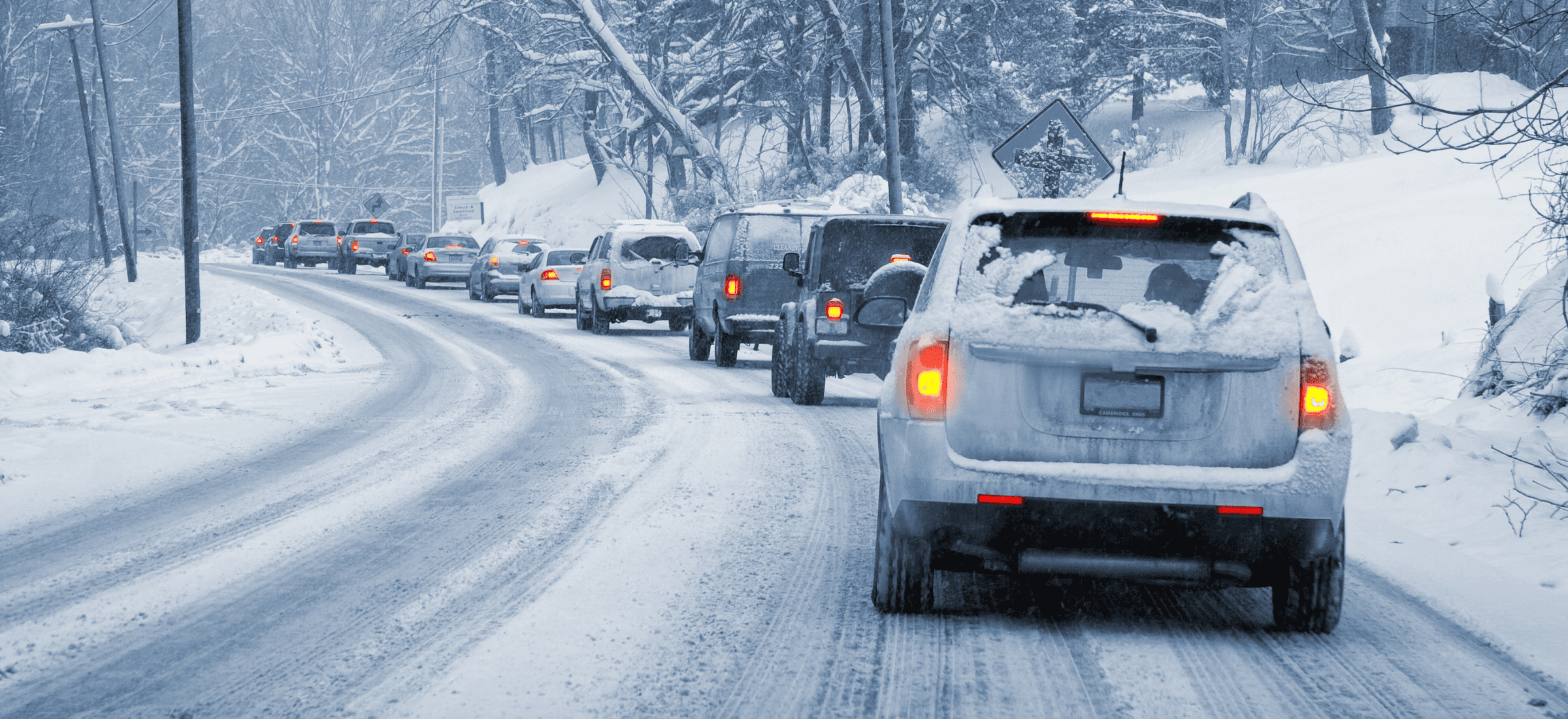
Many Irish rural roads:

  • Are narrow and winding, increasing the risk of being caught by hidden ice or unexpected hazards

  • May not be gritted

  • Can have hidden ice even when main roads appear clear

Take corners slowly, be prepared for oncoming traffic, and watch for pedestrians, cyclists and farm vehicles who may also be affected by slippery conditions.

6. Use Lights Correctly — and Avoid Full Beams in Snow

Good visibility is vital in winter weather:

  • Use dipped headlights in snow or fog

  • Avoid full beams, as they can reflect off snow and reduce visibility

  • Use fog lights only when visibility is significantly reduced, and switch them off when conditions improve

7. Know When Not to Drive

Even with preparation and care, some conditions are simply too dangerous.

If roads are icy, visibility is poor, or a weather warning is in place — and your journey isn’t essential — the safest decision is often not to drive at all. If you are already on the road and conditions become too hazardous, it is best to leave the road safely and wait for conditions to improve. Never leave your vehicle unattended in unsafe conditions.


8. Final Tip: If in Doubt, Stay Home and Stay Safe

No appointment, errand or schedule is worth putting yourself — or others — at risk. If you’re unsure about road conditions, your car’s ability to handle them, or your own confidence driving in snow and ice, stay home and wait until conditions improve.

Your safety always comes first.
Winter weather in Ireland can change quickly. Snow, ice, and freezing temperatures can make even familiar roads unpredictable — especially early in the morning or after dark. Bad weather presents a significant challenge for Irish drivers. Whether you’re commuting, doing the school run or heading out for essentials, taking extra care behind the wheel during icy conditions is crucial.

Here is practical advice to help drivers prepare for winter driving conditions, with tips to help you drive more safely on Irish roads during snow and ice.

1. Check the Weather and Road Conditions Before You Travel

Before setting off, always check:

  • Met Éireann weather warnings

  • Local traffic updates

  • Road conditions for rural or untreated roads

  • Whether your trip is necessary, especially in adverse weather, and plan your journey with safety in mind

In Ireland, black ice is one of winter's biggest hazards as it is difficult to see, it's particularly common on:

  • Shaded areas

  • Bridges and overpasses

  • Rural roads

  • Early mornings and late evenings

You can find up-to-date information on road closures or hazardous conditions from official sources before starting your trip. Planning ahead can help you avoid unnecessary journeys in hazardous conditions.

2. Make Sure Your Car Is Winter-Ready

A well-maintained car is essential for safe winter driving. Before travelling:

  • Check your battery, especially if it is older than three years, as cold weather can reduce its reliability.

  • Ensure your tyres have a minimum tread depth of 1.6 mm for winter driving.

  • Maintain proper tyre pressure during winter, as it can drop with temperature changes.

  • Check that your spare wheel is in good condition and fully inflated before winter driving.

  • Carry essentials such as a high visibility vest and de-icing equipment, including de-icer spray.

  • Ensure tyres are correctly inflated and have adequate tread depth.

  • Check brakes, lights, windscreen wipers and washer fluid.

  • Always de-ice and scrape your windscreen, windows, and glass before driving off to maintain clear visibility.

  • Check your locks to ensure they are not frozen, and use de-icer if necessary.

Many newer cars are fitted with technology such as traction control, which will transfer power to a spinning wheel. Electronic Stability Control (ESC) and Anti-Lock Braking System (ABS), also help motorists maintain control and improve safety in harsh winter conditions.

Driving without proper visibility or road-worthy tyres can increase risk — and may impact insurance in the event of an incident.

Vehicle Types and Handling: What to Know About Your Car in Winter

Not all cars handle winter roads the same way, and knowing your vehicle’s strengths and weaknesses can make a big difference in your safety. Rear wheel drive cars, such as many BMW models, are more prone to wheel spin and can be harder to control on snow and ice, especially when driving downhill. This is due to the way weight is distributed and how power is delivered to the wheels. If you drive a rear wheel drive car, it’s important to reduce your speed and apply the accelerator gently to prevent losing grip. Investing in a set of winter tyres can greatly improve your car’s ability to hold the road in slippery conditions.

Front wheel drive vehicles, on the other hand, generally offer better grip and control in winter, as the weight of the engine is over the driving wheels. However, even with front wheel drive, it’s essential to drive cautiously and avoid sudden acceleration or sharp steering. Whether you hold a full driving licence or a learner permit, always be aware of your car’s handling characteristics and adjust your driving style to suit the conditions. Taking these steps will help ensure you stay in control and reduce the risk of accidents during winter driving.

3. Slow Down and Increase Your Following Distance

Speed limits are maximums, not targets — and in icy conditions, driving well below the limit is often the safest option.

  • Accelerate, brake and steer gently

  • Increase your distance from the vehicle ahead to reduce the chance of a collision

  • Allow extra time to stop, as braking distances are significantly longer on ice

It takes longer to stop a car during winter weather, so always slow down and allow extra distance between you and the car in front.

Sudden movements can cause your car to lose traction, even at low speeds.

4. Use Higher Gears and Gentle Controls

Start by preparing your vehicle and yourself for the unique challenges of driving on snow and ice. It is important to learn proper winter driving techniques to maintain control and safety.

On icy roads:

  • Pull away in second gear where possible, using the clutch smoothly to avoid wheel spin

  • When driving on ice or snow, use as high a gear as you can to maintain traction.

  • Use higher gears in a manual vehicle to reduce the likelihood of wheel spin

  • Gently accelerate to prevent the front wheels from skidding

  • Avoid harsh braking — do not brake suddenly, but do so gradually and keep your right foot light on the accelerator

  • If you do skid, drive into the direction of the skid

  • Driving in snow should be approached differently depending on whether you're driving a manual or automatic vehicle

If your car begins to skid, steer gently in the direction you want the front of the car to go and avoid slamming the brakes.

Hill Starts and Bends: Tackling Ireland’s Slopes and Corners Safely

Ireland’s hilly terrain and winding roads can become especially challenging in winter, making hill starts and bends potential trouble spots. When starting on an uphill slope, select a low gear and apply the accelerator gently to avoid wheel spin. This is particularly important for rear wheel drive vehicles, which are more likely to lose traction and control. As you approach a bend, reduce your speed well in advance and shift to a lower gear to help maintain grip and stability.

Be extra vigilant for patches of ice, especially on shaded bends and hills where the road may look clear but still be slippery. If you’re driving a front wheel drive car, avoid applying too much power, as this can cause the front wheels to lose grip. For rear wheel drive cars, be mindful that the rear wheels can skid out if you accelerate or steer too sharply. Always keep a safe stopping distance from vehicles ahead, as stopping distances increase dramatically on icy roads. By using smooth, gentle inputs and staying alert to changing road conditions, you can safely navigate Ireland’s slopes and corners, even in the most unpredictable winter weather. Remember, taking your time and anticipating hazards is key to staying in control.

5. Be Extra Cautious on Irish Rural Roads

Many Irish rural roads:

  • Are narrow and winding, increasing the risk of being caught by hidden ice or unexpected hazards

  • May not be gritted

  • Can have hidden ice even when main roads appear clear

Take corners slowly, be prepared for oncoming traffic, and watch for pedestrians, cyclists and farm vehicles who may also be affected by slippery conditions.

6. Use Lights Correctly — and Avoid Full Beams in Snow

Good visibility is vital in winter weather:

  • Use dipped headlights in snow or fog

  • Avoid full beams, as they can reflect off snow and reduce visibility

  • Use fog lights only when visibility is significantly reduced, and switch them off when conditions improve

7. Know When Not to Drive

Even with preparation and care, some conditions are simply too dangerous.

If roads are icy, visibility is poor, or a weather warning is in place — and your journey isn’t essential — the safest decision is often not to drive at all. If you are already on the road and conditions become too hazardous, it is best to leave the road safely and wait for conditions to improve. Never leave your vehicle unattended in unsafe conditions.


8. Final Tip: If in Doubt, Stay Home and Stay Safe

No appointment, errand or schedule is worth putting yourself — or others — at risk. If you’re unsure about road conditions, your car’s ability to handle them, or your own confidence driving in snow and ice, stay home and wait until conditions improve.

Your safety always comes first.

Winter weather in Ireland can change quickly. Snow, ice, and freezing temperatures can make even familiar roads unpredictable — especially early in the morning or after dark. Bad weather presents a significant challenge for Irish drivers. Whether you’re commuting, doing the school run or heading out for essentials, taking extra care behind the wheel during icy conditions is crucial.

Here is practical advice to help drivers prepare for winter driving conditions, with tips to help you drive more safely on Irish roads during snow and ice.

1. Check the Weather and Road Conditions Before You Travel

Before setting off, always check:

  • Met Éireann weather warnings

  • Local traffic updates

  • Road conditions for rural or untreated roads

  • Whether your trip is necessary, especially in adverse weather, and plan your journey with safety in mind

In Ireland, black ice is one of winter's biggest hazards as it is difficult to see, it's particularly common on:

  • Shaded areas

  • Bridges and overpasses

  • Rural roads

  • Early mornings and late evenings

You can find up-to-date information on road closures or hazardous conditions from official sources before starting your trip. Planning ahead can help you avoid unnecessary journeys in hazardous conditions.

2. Make Sure Your Car Is Winter-Ready

A well-maintained car is essential for safe winter driving. Before travelling:

  • Check your battery, especially if it is older than three years, as cold weather can reduce its reliability.

  • Ensure your tyres have a minimum tread depth of 1.6 mm for winter driving.

  • Maintain proper tyre pressure during winter, as it can drop with temperature changes.

  • Check that your spare wheel is in good condition and fully inflated before winter driving.

  • Carry essentials such as a high visibility vest and de-icing equipment, including de-icer spray.

  • Ensure tyres are correctly inflated and have adequate tread depth.

  • Check brakes, lights, windscreen wipers and washer fluid.

  • Always de-ice and scrape your windscreen, windows, and glass before driving off to maintain clear visibility.

  • Check your locks to ensure they are not frozen, and use de-icer if necessary.

Many newer cars are fitted with technology such as traction control, which will transfer power to a spinning wheel. Electronic Stability Control (ESC) and Anti-Lock Braking System (ABS), also help motorists maintain control and improve safety in harsh winter conditions.

Driving without proper visibility or road-worthy tyres can increase risk — and may impact insurance in the event of an incident.

Vehicle Types and Handling: What to Know About Your Car in Winter

Not all cars handle winter roads the same way, and knowing your vehicle’s strengths and weaknesses can make a big difference in your safety. Rear wheel drive cars, such as many BMW models, are more prone to wheel spin and can be harder to control on snow and ice, especially when driving downhill. This is due to the way weight is distributed and how power is delivered to the wheels. If you drive a rear wheel drive car, it’s important to reduce your speed and apply the accelerator gently to prevent losing grip. Investing in a set of winter tyres can greatly improve your car’s ability to hold the road in slippery conditions.

Front wheel drive vehicles, on the other hand, generally offer better grip and control in winter, as the weight of the engine is over the driving wheels. However, even with front wheel drive, it’s essential to drive cautiously and avoid sudden acceleration or sharp steering. Whether you hold a full driving licence or a learner permit, always be aware of your car’s handling characteristics and adjust your driving style to suit the conditions. Taking these steps will help ensure you stay in control and reduce the risk of accidents during winter driving.

3. Slow Down and Increase Your Following Distance

Speed limits are maximums, not targets — and in icy conditions, driving well below the limit is often the safest option.

  • Accelerate, brake and steer gently

  • Increase your distance from the vehicle ahead to reduce the chance of a collision

  • Allow extra time to stop, as braking distances are significantly longer on ice

It takes longer to stop a car during winter weather, so always slow down and allow extra distance between you and the car in front.

Sudden movements can cause your car to lose traction, even at low speeds.

4. Use Higher Gears and Gentle Controls

Start by preparing your vehicle and yourself for the unique challenges of driving on snow and ice. It is important to learn proper winter driving techniques to maintain control and safety.

On icy roads:

  • Pull away in second gear where possible, using the clutch smoothly to avoid wheel spin

  • When driving on ice or snow, use as high a gear as you can to maintain traction.

  • Use higher gears in a manual vehicle to reduce the likelihood of wheel spin

  • Gently accelerate to prevent the front wheels from skidding

  • Avoid harsh braking — do not brake suddenly, but do so gradually and keep your right foot light on the accelerator

  • If you do skid, drive into the direction of the skid

  • Driving in snow should be approached differently depending on whether you're driving a manual or automatic vehicle

If your car begins to skid, steer gently in the direction you want the front of the car to go and avoid slamming the brakes.

Hill Starts and Bends: Tackling Ireland’s Slopes and Corners Safely

Ireland’s hilly terrain and winding roads can become especially challenging in winter, making hill starts and bends potential trouble spots. When starting on an uphill slope, select a low gear and apply the accelerator gently to avoid wheel spin. This is particularly important for rear wheel drive vehicles, which are more likely to lose traction and control. As you approach a bend, reduce your speed well in advance and shift to a lower gear to help maintain grip and stability.

Be extra vigilant for patches of ice, especially on shaded bends and hills where the road may look clear but still be slippery. If you’re driving a front wheel drive car, avoid applying too much power, as this can cause the front wheels to lose grip. For rear wheel drive cars, be mindful that the rear wheels can skid out if you accelerate or steer too sharply. Always keep a safe stopping distance from vehicles ahead, as stopping distances increase dramatically on icy roads. By using smooth, gentle inputs and staying alert to changing road conditions, you can safely navigate Ireland’s slopes and corners, even in the most unpredictable winter weather. Remember, taking your time and anticipating hazards is key to staying in control.

5. Be Extra Cautious on Irish Rural Roads

Many Irish rural roads:

  • Are narrow and winding, increasing the risk of being caught by hidden ice or unexpected hazards

  • May not be gritted

  • Can have hidden ice even when main roads appear clear

Take corners slowly, be prepared for oncoming traffic, and watch for pedestrians, cyclists and farm vehicles who may also be affected by slippery conditions.

6. Use Lights Correctly — and Avoid Full Beams in Snow

Good visibility is vital in winter weather:

  • Use dipped headlights in snow or fog

  • Avoid full beams, as they can reflect off snow and reduce visibility

  • Use fog lights only when visibility is significantly reduced, and switch them off when conditions improve

7. Know When Not to Drive

Even with preparation and care, some conditions are simply too dangerous.

If roads are icy, visibility is poor, or a weather warning is in place — and your journey isn’t essential — the safest decision is often not to drive at all. If you are already on the road and conditions become too hazardous, it is best to leave the road safely and wait for conditions to improve. Never leave your vehicle unattended in unsafe conditions.


8. Final Tip: If in Doubt, Stay Home and Stay Safe

No appointment, errand or schedule is worth putting yourself — or others — at risk. If you’re unsure about road conditions, your car’s ability to handle them, or your own confidence driving in snow and ice, stay home and wait until conditions improve.

Your safety always comes first.