
Learning to drive is an exciting milestone, but it also comes with strict rules designed to keep you (and everyone else on the road) safe. One of the most important requirements for young drivers in Ireland is displaying L plates correctly.
In this guide, we’ll explain what L plates are, who needs them, where to place them, when to remove them, and answer the most common L plate questions.
Plus — if you’re just starting your driving journey — you’ll learn how its4women.ie, in partnership with Ladybird Driving School, can help you get lesson-ready with expert, RSA-approved instructors.
What Are L Plates?
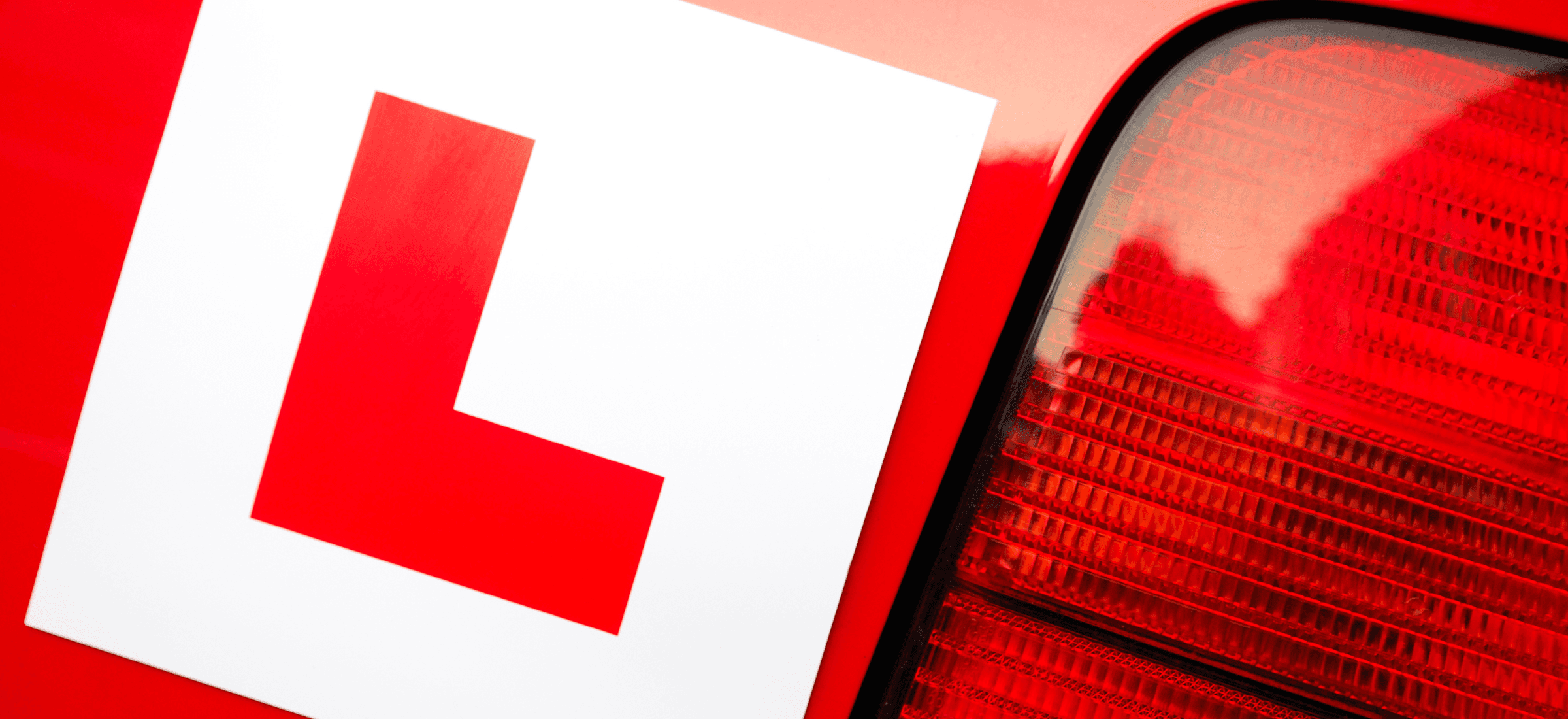
L plates are the red “L” symbols displayed on vehicles being driven by learner drivers in Ireland. The “L” plate is a sign required by law under Road Traffic Regulations.
The design of the L plate features a red letter 'L' on a white background, with the plate measuring at least 15cm high and a border of at least 2cm to ensure visibility and legal compliance.
Their purpose is simple: L plates, also called learner plates, are designed to enhance safety by alerting other road users that the driver is still in the learning stage and may drive more cautiously or slowly, especially when practising manoeuvres or in busy traffic. L plates serve as a signal to other drivers to be patient and give learner drivers more space. The purpose of L plates is to reduce the number of collisions, deaths, and injuries among learner drivers.
Who Needs to Use L Plates in Ireland?
Passing the theory test is the first step before you can apply for a learner permit.
You must display L plates if:
You hold a Learner Permit (first or subsequent).
You are driving any vehicle covered by that learner permit.
You have not yet passed your full driving test.
You are driving without a fully licenced driver accompanying you (for car learners, this must be an experienced driver who has held a full licence for at least two years and is seated in the front passenger seat).
Learner drivers must hold a learner permit and display L plates for a minimum amount of time—at least six months—before they are eligible to take the driving test.
Practice on public roads is essential for skill development, but is only allowed when all these conditions are met.
It is an offence to drive without correctly displayed L plates if you hold a learner permit.
Where to Put L Plates on Your Car
Correct placement is essential to comply with Irish law. L plates must be displayed on both the front and rear of the vehicle and must be clearly visible from a distance of at least 20 metres.
3.1 The front L plate should be placed on the car's body, such as the bonnet or bumper, and not on the front windscreen to avoid obstructing the driver's view.
3.2 The rear L plate should be positioned on the car's body or the back window, ensuring it does not obstruct the driver's view. Plates must be visible to drivers approaching from behind.
3.3 L plates can be magnetic or adhesive, but must be fixed securely and comply with transport regulations. Adhesive L plates are an option, provided they are secure, visible, and meet legal standards.
3.4 In Ireland, the legal size requirement for L plates is at least 15cm high with a 2cm border. For comparison, the UK requires L plates to be 178mm x 178mm.
Always ensure L plates are displayed at both the front and rear of the vehicle and meet all visibility and size requirements.
1. Clearly Visible from the Front
Affix one L plate to the front of your vehicle, in a position that is:
Upright
Not obstructed
Easily readable by oncoming traffic
Most drivers place it on the left side of the front bumper or the top corner of the windscreen (inside or outside, depending on the plate type).
2. Clearly Visible from the Rear
Place the second L plate at the rear of your car:
Usually on the left side of the rear bumper, OR
In the rear window, provided it does not obstruct your visibility
3. Flat and Secure
The plate must be securely attached so it doesn’t flap, fall off, or become unreadable.
4. Full Size
L plates must comply with Irish standards — they cannot be miniature or partially obscured.
Do I Need to Leave L Plates on the Car at All Times?
If you are a learner driver and you are driving, the L plates must be displayed at all times.
If someone else is driving the vehicle and they hold a full driving licence, L plates should be removed or covered. Leaving them on unnecessarily can confuse other drivers or lead to questions if stopped by Gardaí.
L Plate FAQs – Everything Learner Drivers Need to Know
When should I remove L plates from my car?
You must remove L plates as soon as you pass your driving test.
After passing, you must display N plates for two years as part of the Novice Driver rules.
Where can I buy L plates?
You can buy them in:
Motor factors
Petrol stations
Supermarkets
Online stores
Driving schools (including Ladybird Driving School centres)
Can I print my own L plates?
No — printed paper plates may not meet visibility or size requirements.
Official, regulation-standard L plates must be used. L plates can be bought from a number of online and in-store retailers.
How many L plates do I need on a car?
You need two:
One on the front
One on the rear
Are magnetic L plates legal?
Yes — Magnetic L plates are a popular option for learner drivers due to their ease of attachment and removal. L plates can be self-adhesive, magnetic, or plastic clip-on types. Magnetic L plates are legal as long as:
They are the correct size
They are securely attached
They remain fully visible when driving
How do I use magnetic L plates properly?
Magnetic or adhesive L plates are common temporary solutions but must be secure during use.
Clean the surface before attaching
Ensure the plate lies flat with no air bubbles
Check regularly that they haven’t slipped — especially in bad weather
Can you drive on the motorway with L plates?
No.
Learner drivers cannot drive on Irish motorways (regardless of L plates).
You must wait until you have passed your driving test and switched to N plates.
Where can I NOT drive with L plates?
Learner drivers cannot drive:
On motorways
Without being accompanied (for car learners) by a fully licenced driver
In certain restricted areas if driving as part of a work vehicle or commercial vehicle without proper supervision
How long do I have to display L plates for?
Until you:
Pass your full driving test, and
Replace L plates with N plates for the required two-year novice period.
Learner drivers must display L plates at all times while driving, and failure to do so is considered a traffic violation.
Can I take down L plates after passing my driving test?
Yes — they must be removed immediately and replaced with N plates.
Can you get penalty points for driving with no L plates?
Yes. Failure to display L plates correctly is a legal offence, potentially leading to fines and penalty points.
Driving without L plates as a learner driver can result in:
Penalty points
A fine
Possible difficulties with insurance claims
Potential impoundment of the vehicle if additional learner-driver offences are present (e.g., unaccompanied driving)
Penalties for not displaying L plates can include up to 6 penalty points and a €120 fine in Ireland. If a learner driver accumulates seven penalty points, their driving licence can be revoked, requiring them to retake the theory test.
Full Licence - What Are N Plates?
After you pass your driving test, you must replace your L plates with N plates, which stand for Novice Driver. Novice drivers are those who have recently passed their test and are still within the initial two-year period of holding a full licence.
N plates must be displayed for two years from the date you pass your test. The novice period and N plate requirement apply to certain vehicle categories, such as cars and motorcycles, but do not extend to trucks or buses.
They show that you are a newly qualified driver and are still gaining confidence and experience behind the wheel. During this novice period, you are also subject to a reduced penalty point threshold — seven points instead of twelve.
Learning to Drive? Let Us Help You Get Started
Correctly displaying L plates isn’t just a rule — it’s an important part of staying safe and visible on Irish roads while you learn.
By following the guidance above and ensuring you understand when and where to use L plates, you'll be fully set for your driving journey.
its4women.ie now offers RSA-approved driving lessons in partnership with Ladybird Driving School, Ireland’s leading driving school known for high pass rates and expert instructors.
Safe, supervised practice during the learner phase is essential for developing your driving skills and building confidence before taking your driving test.
Whether you’re preparing for your first lesson, building confidence, or getting ready for your test, Ladybird’s qualified instructors will guide you every step of the way — taking the confusion out of learning to drive in Ireland.
Learn more and book your lessons with its4women and Ladybird Driving School.
Company
Insurance
We use cookies on this website, more info can be found here. Copyright © 2024 MCL Insurance Services (Ireland) Limited. All rights reserved. MCL Insurance Services (Ireland) Limited trading as Its4women.ie is regulated by the Central Bank of Ireland.